
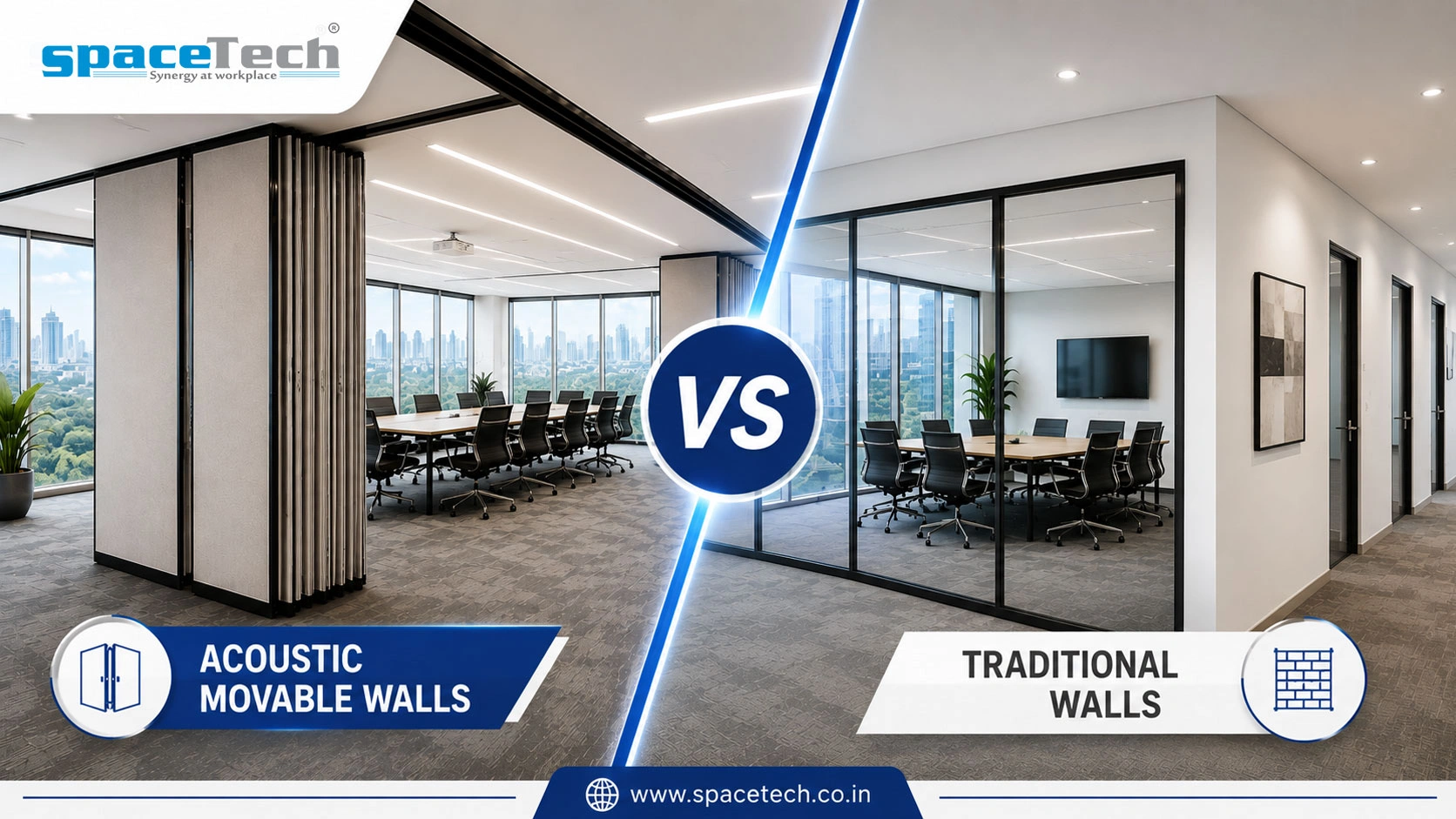
Modern offices are no longer designed as fixed spaces where every room has only one purpose. Businesses today need meeting rooms, private cabins, collaborative areas, training spaces and conference rooms that can adapt to changing requirements. This is where an Acoustic Movable Wall is becoming an interesting alternative to traditional permanent walls.
A traditional wall creates a fixed division. Once constructed, changing the layout can involve demolition, construction work, additional cost and significant downtime. An acoustic movable wall, on the other hand, allows a large space to be divided when required and opened up again when more space is needed.
So, which option is better for a modern office traditional walls or acoustic movable walls? The answer depends on how your business uses its space.
What Are Acoustic Movable Walls?
An acoustic movable wall is a flexible partitioning system designed to divide large areas into separate functional spaces while also providing sound insulation and privacy. Unlike a permanent wall, these systems can be moved, folded or operated to change the configuration of a room.
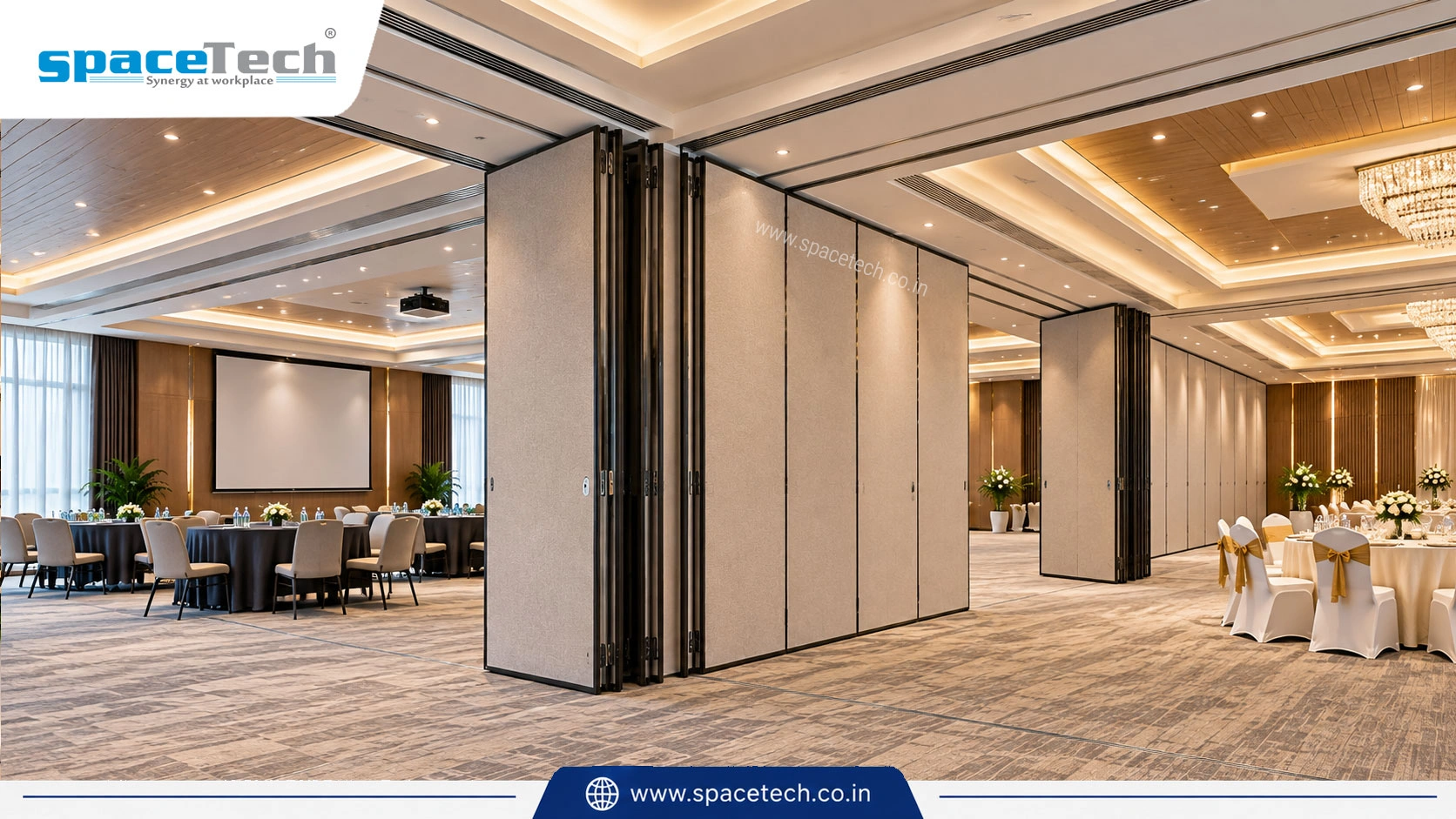
For example, a large conference hall can be divided into multiple meeting rooms for smaller teams. When a larger event is planned, the partitions can be opened to create one spacious area again. This makes an acoustic sliding folding partition particularly useful for offices, hotels, conference halls, educational institutions, hospitals, auditoriums and other commercial spaces.
Quick takeaway
Traditional walls are built for permanence. Acoustic movable walls are built for change. The right choice depends on whether your space needs to adapt over time not just how it looks today.
Traditional Walls vs Acoustic Movable Walls
The biggest difference is flexibility. Traditional walls are designed for permanent space division. Acoustic movable walls are designed for spaces that may need to change over time.
| Feature | Traditional Walls | Acoustic Movable Walls |
|---|---|---|
| Space flexibility | Low | High |
| Layout changes | Difficult | Easy |
| Construction work | Usually required | Minimal |
| Space utilisation | Fixed | Flexible |
| Sound privacy | Depends on construction | Designed for acoustic performance |
| Long-term adaptability | Limited | High |
| Suitable for changing needs | Less suitable | Highly suitable |
For businesses that frequently change their workspace requirements, this flexibility can become a major advantage.
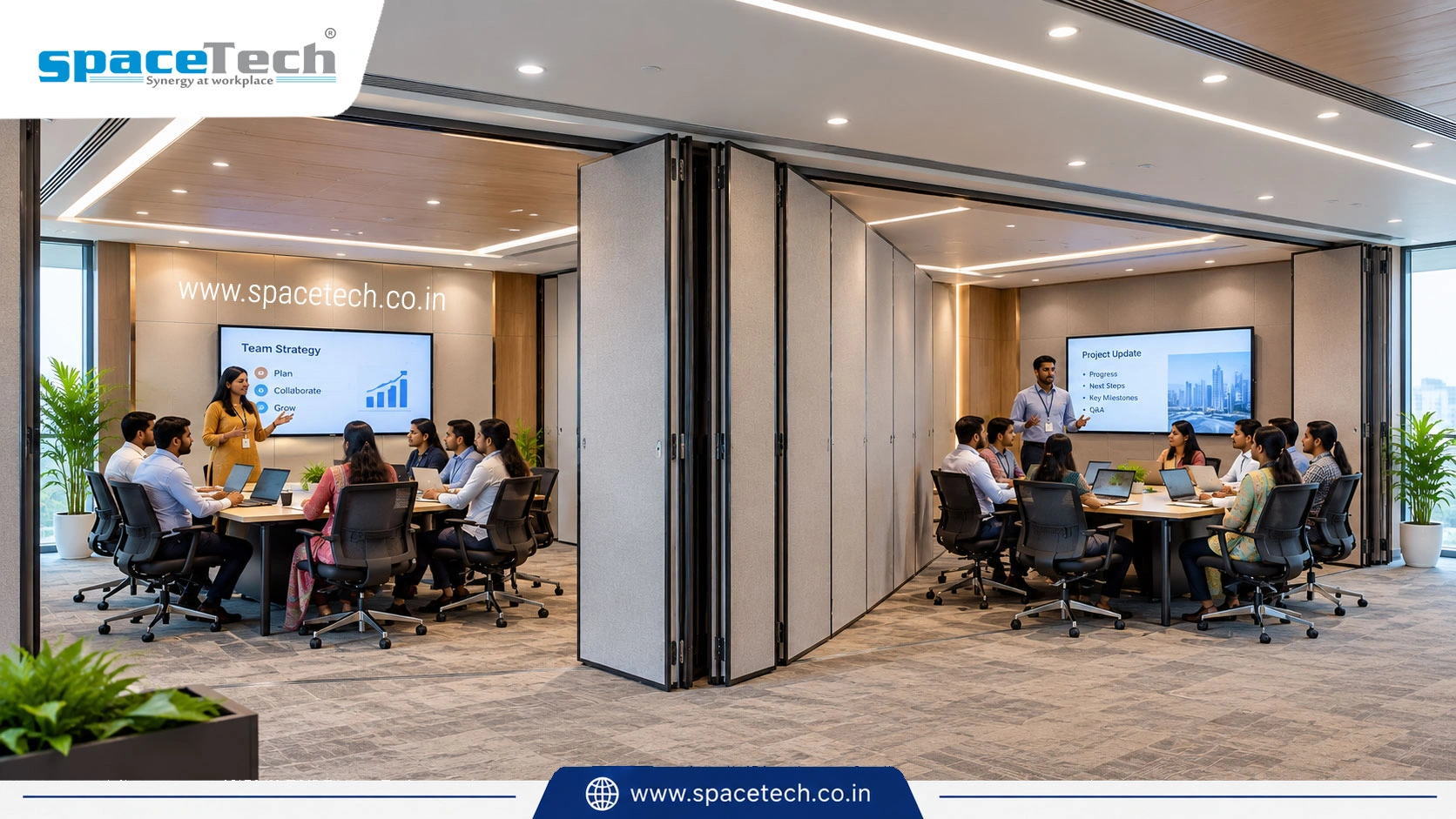
1. Better Use of Available Office Space
Office space is expensive, particularly in commercial areas. Businesses therefore need to make every square foot useful. A large room may be useful for a company event or presentation, but the same space may be unnecessarily large for a regular team meeting.
With a movable partition system, the same area can serve different purposes across the day morning training sessions, afternoon meeting rooms, and a large conference or event space in the evening. Instead of constructing separate rooms for every requirement, one flexible space can serve multiple functions.
2. Improved Privacy and Noise Control
Open offices encourage collaboration, but excessive noise can affect concentration and privacy. This is one reason acoustic performance has become an important consideration in modern workspace design.
An acoustic movable wall can help create more private areas by providing sound insulation between spaces, particularly useful for:
- Meeting rooms and boardrooms
- Conference rooms and training rooms
- Management cabins and HR rooms
- Client discussion areas
- Classrooms and multipurpose halls
The goal is not simply to divide a room visually the right system should also support a more comfortable and private environment.
3. Flexibility Without Major Renovation
Imagine your company needs two additional meeting rooms six months after completing its office interior. With traditional construction, changing the layout may involve breaking walls, electrical modifications, civil work, painting and additional labour.
A movable partition approach makes future space changes considerably easier one reason businesses looking for flexible office partition solutions in Pune consider acoustic movable wall systems, and why Acoustic Sliding Folding Partitions reduce the recurring cost of change.
Not Sure Which Partition Fits Your Space?
Get a free site visit our team will recommend the right acoustic movable wall configuration for your office, hotel or institution across Pune, PCMC & Mumbai.
4. One Space, Multiple Possibilities
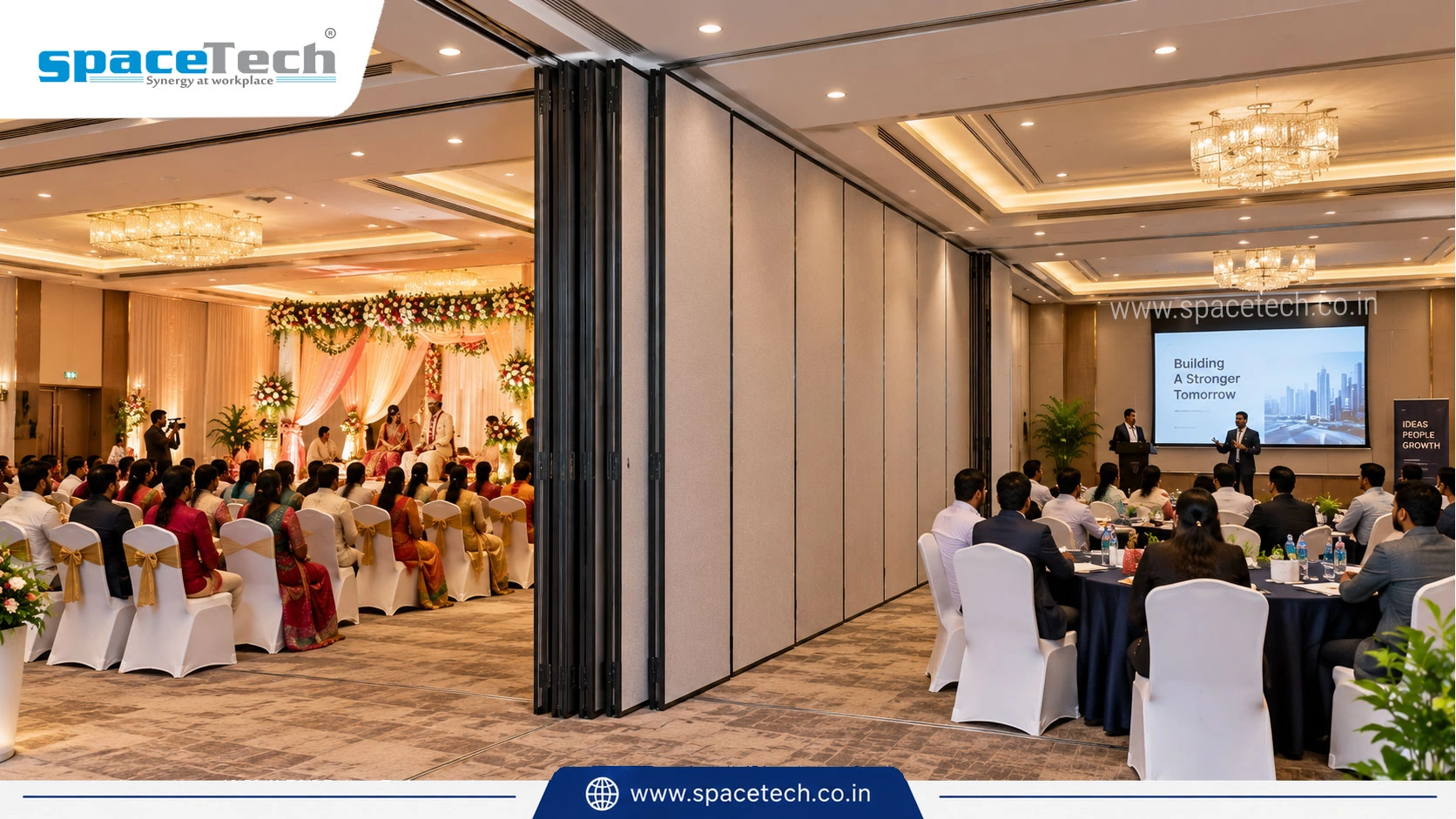
Modern commercial spaces are increasingly expected to perform multiple functions. A hotel conference hall may need to accommodate a large event on one day and several smaller meetings on another. Similarly, an educational institution may need one large classroom area to become multiple smaller teaching spaces.
Acoustic sliding folding partitions help create this flexibility the same principle works in corporate offices, training centres, convention spaces and commercial buildings.
5. A More Adaptable Approach to Office Design
Office design is changing along with the way people work. Businesses may expand, reduce teams, introduce hybrid working models or change departmental requirements a fixed office layout may not always remain suitable.
Flexible partitioning gives businesses the ability to adapt the physical workspace as requirements change. This doesn't mean traditional walls are no longer useful; permanent walls can still be the right choice where rooms are intended to remain fixed for many years. The important question is: does the space need to change in the future? If the answer is yes, flexibility should become an important part of the design decision.
6. Acoustic Movable Walls Can Complement Modern Office Interiors
Functionality is important, but office interiors also need to look professional. Modern acoustic movable wall systems are available in different finishes, sizes and panel configurations, allowing them to be integrated with different interior concepts.
They can be planned alongside other office interior elements such as:
- Glass partitioning for visual openness
- Office modular furniture for efficient workstations
- Ceiling baffles for acoustic comfort
- Ceiling light fixtures for effective illumination
- Commercial carpets for workplace aesthetics and comfort
The result is a workspace where different interior elements work together rather than being treated as separate products.
7. Where Are Acoustic Movable Walls Most Useful?
Corporate Offices
Create meeting rooms, training rooms and private discussion areas without permanently restricting the entire floor plan.
Hotels and Conference Halls
Divide a large hall into multiple smaller event spaces and reopen it when a larger gathering is required.
Educational Institutions
Create multiple classrooms or learning spaces from a larger room according to daily requirements.
Hospitals
Flexible space division can be useful in selected areas where changing room configurations are required.
Restaurants and Commercial Spaces
Large areas can be divided for private functions, events or different customer requirements.
Which One Should You Choose?
There is no single solution for every project.
Choose traditional walls when:
- The room layout is expected to remain permanent
- You do not anticipate frequent layout changes
- A fixed construction is more appropriate for the project
- Future flexibility is not a major requirement
Consider acoustic movable walls when:
- You need flexible room configurations
- One space needs to serve multiple purposes
- Privacy and sound control are important
- You want to reduce major renovation work when layouts change
- Your office or commercial space needs to adapt over time
For modern offices, flexibility can be just as important as aesthetics.
What to Consider Before Choosing an Acoustic Movable Wall
- Room size: the dimensions of the opening and overall room influence the appropriate configuration
- Acoustic requirements: a meeting room may need a different acoustic approach than a general workspace
- Frequency of movement: smooth operation and durable hardware matter more when the wall is opened and closed often
- Finish and design: the partition should complement the existing office interior
- Future requirements: think beyond today's layout consider how the space may be used in one, three or five years
Acoustic Movable Walls in Pune: What Businesses Should Look For
For businesses searching for an Acoustic Sliding Folding Partition in Pune, the right solution should be based on the actual requirements of the workspace. Pune and PCMC have a wide range of office environments, from compact professional offices and startups to large corporate workspaces and hospitality venues each requiring a different approach to acoustic performance, space planning and design.
At SpaceTech Interior Systems Pvt. Ltd., we focus on understanding how a space is actually used before recommending a partition solution rather than treating every project the same way. As an Office Modular Furniture Supplier as well, we also help plan furniture layouts, ceiling light fixtures and acoustic ceilings around the movable wall configuration for a coordinated finish.
Final Thoughts
Traditional walls still have their place in office construction they provide permanent room division and can be ideal for spaces where the layout is unlikely to change.
But modern businesses increasingly need flexibility. An acoustic movable wall can allow one large space to become several smaller rooms and then return to a larger open area when required. Along with sound insulation, privacy and flexible space utilisation, this makes movable partition systems worth considering for modern offices and commercial environments.
The right choice ultimately depends on your space, budget, acoustic requirements and future plans. If your office needs a partition solution that can adapt as your business changes, an acoustic sliding folding partition may be a smarter option than building another permanent wall.
Frequently Asked Questions
Yes. Acoustic movable walls can be used to create flexible meeting rooms, training rooms, conference areas and private spaces within offices.
Acoustic movable walls are designed to provide sound insulation and improve privacy, but the actual acoustic performance depends on the specific system, installation and surrounding building conditions.
Yes. One of the main advantages of a movable partition system is that a larger space can be divided into multiple functional areas when required.
No. They can also be used in hotels, conference halls, educational institutions, hospitals, auditoriums, restaurants and other commercial buildings.
Traditional walls permanently divide a space, while acoustic movable walls are designed to provide flexible space division and can be opened or repositioned when required.
Businesses should consider room dimensions, acoustic requirements, frequency of operation, design, finish, installation requirements and future space-planning needs.